
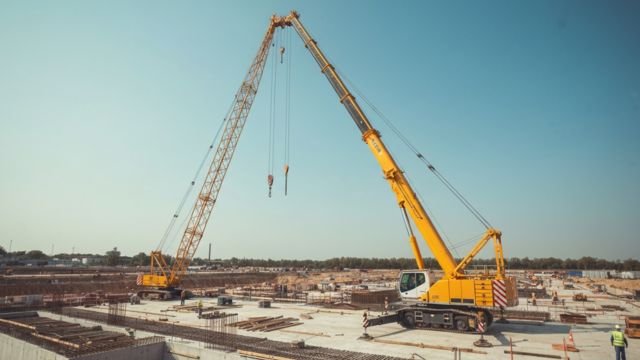
On complex construction sites, productivity is rarely about working faster. It is about working smarter. One of the most effective ways to improve lifting efficiency on high-rise and confined projects is by optimising pick-and-drop zones for luffing jibs. When planned correctly, these zones can significantly reduce cycle times, improve safety, and keep trades moving without interruption. This is why luffing crane hire has become such a strategic choice for urban developments where space, time, and precision are critical.
Why Pick-and-Drop Zones Matter on Modern Sites
Pick-and-drop zones define where loads are collected and where they are placed. Poorly planned zones lead to longer slewing times, excessive jib movement, and unnecessary waiting for ground crews. Over the course of a project, these inefficiencies can add days or even weeks to the schedule. With luffing crane hire, the ability to raise and lower the jib provides more flexibility in designing efficient lifting paths, especially on congested sites with multiple structures and active work fronts.
In dense areas where tower crane hire northern sydney is commonly required, projects often operate with limited laydown space. Optimised pick-and-drop zones help make the most of every square metre, ensuring materials arrive exactly where they are needed without disrupting other site activities.
How Luffing Jibs Improve Lifting Precision
Unlike fixed horizontal jibs, luffing jibs allow operators to control the jib angle throughout the lift. This vertical flexibility enables more direct lifting paths between pick-and-drop zones. By reducing unnecessary slewing and long-radius lifts, luffing crane hire helps shorten cycle times and lowers mechanical wear on the crane.
This precision is particularly valuable when lifting materials to upper floors or between closely spaced buildings. The crane can approach drop zones from steeper angles, improving placement accuracy and reducing the need for manual repositioning by workers. On projects using tower crane hire northern sydney, this capability often becomes a key productivity advantage.
Planning Pick Zones for Faster Cycles
Efficient pick zones are located where materials can be accessed quickly and safely. For luffing crane hire operations, this often means positioning pick zones closer to the crane base or along clear vertical lift lines. Materials should be staged in a way that allows immediate attachment, reducing hook time and idle periods.
Ground logistics play a major role here. Coordinating delivery schedules with crane availability ensures that loads are ready when the crane is free, rather than waiting in queues. In urban projects supported by tower crane hire northern sydney, this level of coordination is essential to avoid congestion and downtime.
Designing Drop Zones That Support Workflow
Drop zones should align with the sequence of construction. Placing materials too early or in poorly chosen locations can create rehandling work and safety risks. With luffing crane hire, drop zones can be planned vertically, delivering materials directly to the point of installation rather than central stockpiles.
This just-in-time approach supports smoother workflows for trades and reduces on-site clutter. The result is a safer, more organised site where crews can focus on installation rather than material handling. Many contractors using tower crane hire northern sydney adopt this strategy to maintain momentum on fast-paced projects.
Reducing Conflicts Between Cranes and Trades
On busy sites, cranes often share airspace with other cranes, hoists, and temporary structures. Optimised pick-and-drop zones help minimise conflicts by defining clear lifting corridors. Luffing crane hire is particularly effective in these scenarios, as the jib can be luffed over obstacles instead of swinging wide arcs that interfere with adjacent operations.
Clear communication between crane operators, dogmen, and site supervisors is critical. When everyone understands the designated zones and lifting sequences, productivity improves and the risk of errors decreases. This coordinated approach is standard practice on complex developments relying on tower crane hire northern sydney.
Technology and Data-Driven Optimisation
Modern site planning tools have transformed how pick-and-drop zones are designed. Digital models and lift simulations allow teams to test different configurations before work begins. For luffing crane hire, these tools can identify the most efficient jib angles and lift paths, reducing guesswork and improving real-world performance.
Data collected during operations can also be used to refine processes. Monitoring lift times, delays, and congestion points helps teams adjust zones as the project evolves. This continuous improvement mindset is increasingly common on projects that depend on tower crane hire northern sydney to meet tight deadlines.
Balancing Safety and Productivity
While productivity is important, safety must always come first. Optimised pick-and-drop zones reduce the need for manual handling, limit load travel over occupied areas, and create more predictable crane movements. Luffing crane hire supports these goals by offering greater control and stability during lifts.
When zones are clearly marked and consistently used, workers gain confidence in crane operations. This reduces hesitation, miscommunication, and near-miss incidents, all of which can slow progress. Safe sites are productive sites, and well-planned lifting strategies reinforce this principle.
Conclusion
Maximising productivity with luffing jibs is not about pushing equipment to its limits. It is about intelligent planning and thoughtful execution. By optimising pick-and-drop zones, luffing crane hire enables faster cycle times, smoother workflows, and safer operations on complex sites. For high-density projects supported by tower crane hire northern sydney, this approach delivers measurable gains in efficiency and reliability. When cranes, crews, and logistics work in harmony, productivity becomes a natural outcome rather than a constant struggle.